
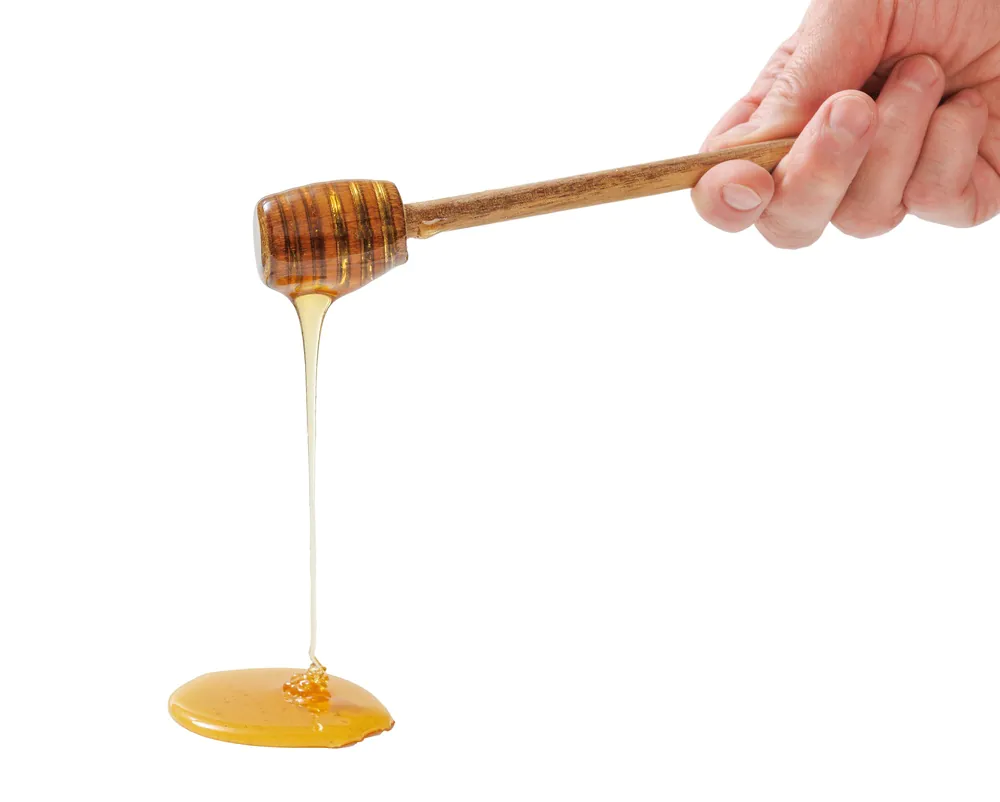
Vegan honey alternatives could be engineered to have similar antimicrobial properties to prized mānuka honey from New Zealand, according to research at Aston University.
Vegan honey alternatives, based on sugar syrup, mimic the natural consistency, carbohydrate structure (sugar and inulin) and taste of honey while containing no bee-derived components. They are gaining popularity with the rise of veganism, and the decline of honeybee populations, which is impacting honey supplies.
Mānuka honey, from New Zealand, is made by bees that pollinate the mānuka bush and it is known for its unique antibacterial properties. It is expensive and as a natural product, can vary between batches. Dr Jonathan Cox, senior lecturer in biosciences at Aston University, wanted to investigate whether the key antimicrobial components of medical honey could be recreated in a fully vegan, synthetic formulation. The broader aim was to understand which components are responsible for the antibacterial activity and whether a sustainable, reproducible alternative to natural honey could be developed.
Previous research from Dr Cox’s group showed that mānuka honey is active against Mycobacterium abscessus, a highly drug-resistant bacterium that can cause difficult-to-treat lung, skin and soft tissue infections. New treatment options are urgently needed. They tested their vegan honey formulations against a culture of this bacterium, both for their ability to stop bacterial growth, and to kill bacteria outright.
Two components of mānuka honey proved to be particularly effective when added to the vegan honey formulations – methylglyoxal (MGO) and hydrogen peroxide. The most effective vegan honey formulations against M. abscessus were those containing combinations of MGO and enzyme-based systems that generate hydrogen peroxide within the honey. The best formulations could kill M. abscessus.
The findings suggest that some of the beneficial antimicrobial properties of medical honey can potentially be reproduced without using bee-derived products.
Dr Cox says that the next steps in the research will be to optimise the formulations and better understand how the different antimicrobial components work together. He also suggests that future work could test the efficacy of the vegan honey formulations against other clinically important disease-causing bacteria.
Dr Cox adds:
“Longer term, this research could help support the development of sustainable honey-inspired antimicrobial products for wound care or other topical applications, without relying on bee-derived ingredients.
“The work also provides insight into how natural honey functions, which may help guide the design of next-generation antimicrobial therapies.”

- Half of UK workers with endometriosis lose income - October 15, 2026
- Lifestyle changes can support women in menopause - October 15, 2026
- Engineering vegan honey to treat infection - October 15, 2026