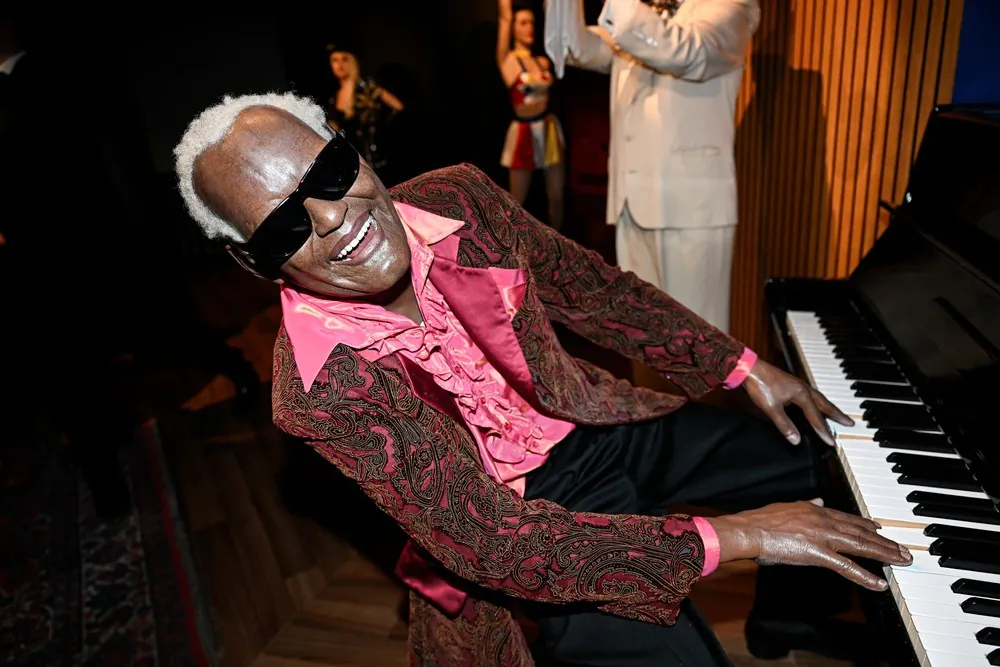
When you think of musical icons with a visual impairment, a familiar image of Stevie Wonder or Ray Charles may come into your head.
Their iconic blacked out glasses are universally recognisable and are signature looks in music history. However, could blocking light from a blind person’s eyes have unexpected, profound health consequences?
Rods and cones, the vision sensors of the eye are well known. They work by converting light into electrical signals which are then relayed along the optic nerve to the Occipital Lobe which process the information and effectively translates these signals into visual information. This allows us to perceive a colour image of varying light intensity. However, this is not the only function of the eye.
‘Intrinsically photosensitive retinal ganglion cells’ (ipRGCs) found in the retina do not form images but instead directly measure ambient light. They do this by using a protein called melanopsin which is a photopigment and is most sensitive to a short wavelength of light (blue-light). When researchers looked at mice that did not have working rod and cone cells they were able to show that the mice could still adjust their biological clocks using ipRGCs.
As Professor Russell Foster, a circadian neuroscientist at Oxford University, explains in an article in The Guardian, even in individuals who have lost their conventional visual photoreceptors, “the pRGCs can still detect light to shift the circadian clock.”
Your biological clock is extremely important. Not only does it regulate sleep by managing melatonin and other sleep related chemicals, but it also aligns hormone production, digestion and energy use in times we are most likely to be eating and active. So important is normal regulation of the biological clock that The International Agency For Research On Cancer classify night shift work as a “probable human carcinogen”.
When the circadian clock goes awry, serious health problems can follow, including sleep disorders, worsened mental health, weakened immune systems, and greater risk of certain types of cancer.
There are still many good reasons to wear darkened glasses that can protect against harmful UV rays but perhaps we should consider the role of the ipRGCs who are quietly keeping time for the brain, allowing our bodies to adjust their metabolic and endocrine behaviour and so protecting our health and wellbeing.

- Should visually impaired people wear dark glasses? - October 9, 2026
- Eat on time for a longer life - October 2, 2026