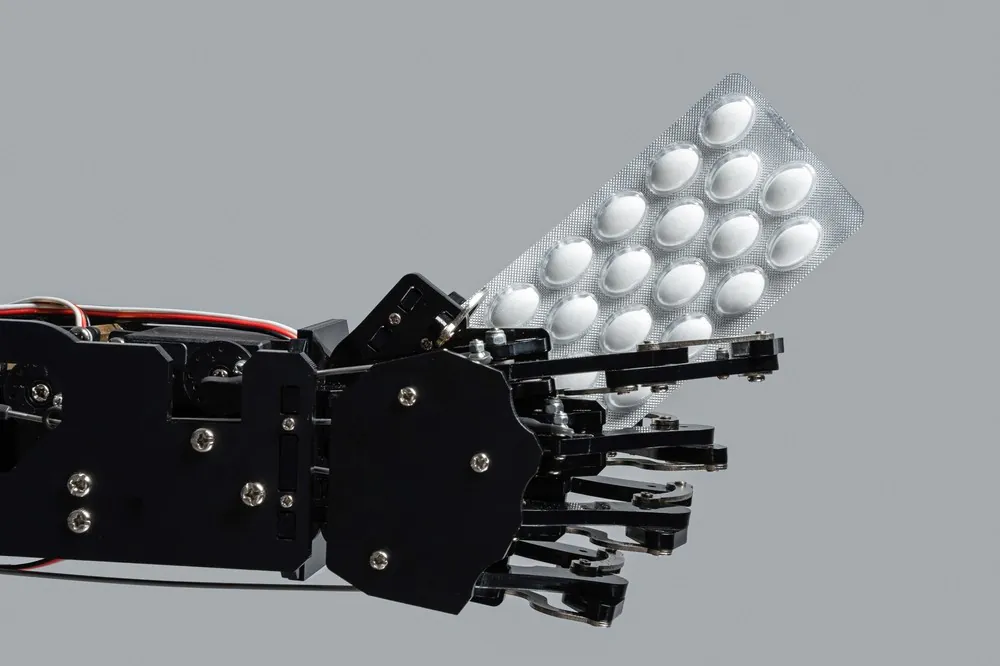
Artificial intelligence (AI) is a well-established tool for drug discovery and now it is increasingly finding a role in pharmaceutical manufacturing.
Pharmaceutical companies are beginning to use AI to make production faster, more reliable, and easier to manage, while regulators are also exploring its use to improve oversight. The debate is now on where AI can deliver the greatest operational and regulatory value, says GlobalData, a leading intelligence and productivity platform.
AI’s move beyond the lab and onto the factory floor is explored in the latest edition of GlobalData’s monthly “Bio/Pharmaceutical Outsourcing” report. It is a trend that sees technologies such as digital twins, predictive maintenance, and real-time quality monitoring being used to cut downtime, reduce waste, and improve batch consistency. These tools allow manufacturers to identify and test production changes in real time before implementing them in live environments.
However, the technology remains an emerging capability rather than a fully established one, with many companies still testing these tools through pilot programs. There is an urgency to those assessments because pharmaceutical manufacturing is under pressure to meet increasing demand, particularly in high-value therapy areas such as obesity and diabetes.
The industry’s challenge is to maximize supply for existing assets where manufacturing capacity is limited. Consequently, the primary AI opportunity in pharma manufacturing is to improve the performance of existing facilities without the need to build new infrastructure.
“Rather than replacing established manufacturing practices, AI is being harnessed to strengthen them.”
Edita Hamzic, Healthcare Analyst at GlobalData, says: “While many pharmaceutical companies are investing in AI, implementation remains the biggest challenge. Many companies face problems with outdated systems, uneven data quality, and difficulties in moving from pilot projects to routine use in highly regulated environments.
Success will therefore depend on execution and the ability to combine manufacturing expertise with digital infrastructure in day-to-day manufacturing operations. Companies that see AI as part of their operational model, not as a standalone technology project, are most likely to benefit”
AI is also beginning to be hardwired into US and European pharmaceutical manufacturing regulation, but the FDA and EMA are approaching it differently. The FDA is already using AI to determine where inspections are carried out for its new one-day inspection pilot. It is exploring the use of AI to identify lower-risk sites so that inspectors can focus on facilities where compliance concerns are most likely to arise, but the criteria behind that is opaque.
Meanwhile, the EMA is more focused on safeguards around AI use. The European agency sees AI as a useful tool across the whole medicine lifecycle but only if it’s used in a transparent and human-centred way.
Hamzic concludes: “Rather than replacing established manufacturing practices, AI is being harnessed to strengthen them. AI is therefore becoming increasingly important in drug manufacturing as the sector moves towards systems that link production, quality, and regulation more closely than before.”

- Eyes could unlock personalised pain relief with virtual reality - October 22, 2026
- Why we really love murder mysteries - October 22, 2026
- New consensus to tackle postcode lottery in cancer care - October 22, 2026