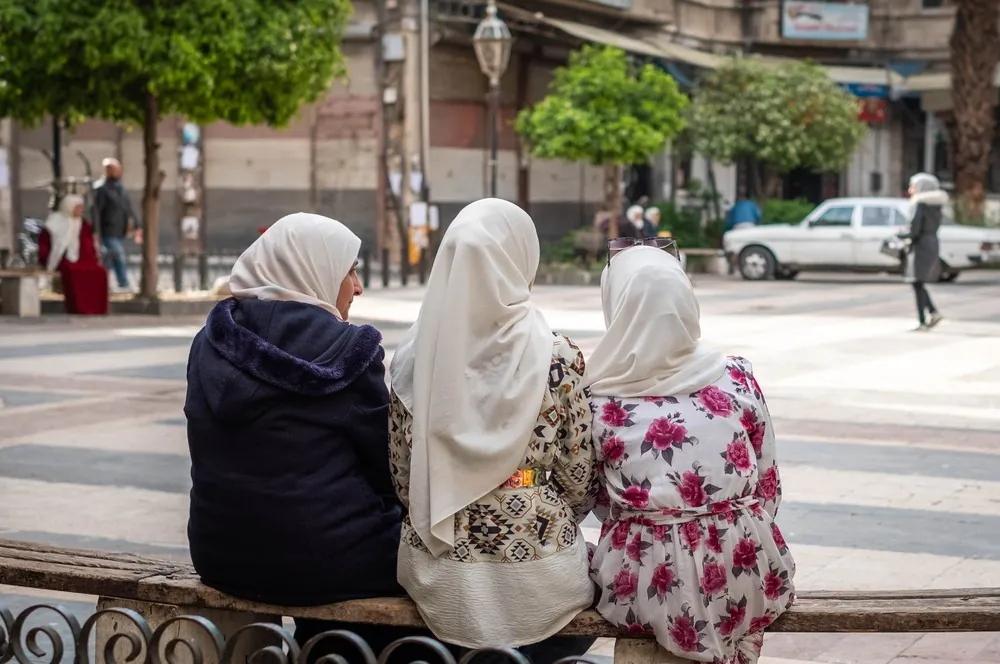
Marking World Cervical Cancer Elimination Day, it is sobering to reflect that 94% of cervical cancer deaths occur in low and middle-income countries.
We are a group of Syrian and British clinicians, development leaders and researchers who don’t think that is right. In response to local clinicians’ outcries for action in the face of increasing numbers of women suffering with cervical cancer, we have come together to realise the ambition of the WHO and make the elimination of cervical cancer in Syria a reality with the Syria Cervical Cancer Prevention Programme (SCCPP).
The strategy of the WHO is to eliminate cervical cancer by offering more vaccination, screening and treatment to all women and girls globally. To reach and maintain an incidence rate of below 4 per 100,000 women, the WHO devised the following three targets to be reached by 2030: 90% of girls fully vaccinated with the HPV vaccine by the age of 15; 70% of women screened using a high-performance test by the age of 35, and again by the age of 45; 90% of women with pre-cancer treated and 90% of women with invasive cancer managed.
Cervical cancer is caused by persistent infection with high-risk strains of human papilloma virus (HPV) which are found in 99.7% of cervical cancers. The relatively low incidence of cervical cancer in high-income countries like the UK can be attributed to increased awareness and the success of comprehensive screening programmes combined with the introduction of the HPV vaccine which demonstrates the preventable nature of this disease .
Women diagnosed with cervical cancer in Syria are more than twice as likely to die compared to those in the UK
The situation in Syria
Women diagnosed with cervical cancer in Syria are more than twice as likely to die compared to those in the UK according to the WHO which showed a mortality to incidence rate of 64% (30% in the UK). This is a personal tragedy for families and a national challenge for Syria. Importantly, these deaths could be prevented if early changes in cells were detected by screening of the sort provided by the SCCPP.
Even before the conflict which devastated Syria began, access to cancer screening and treatment was inequitable, with services concentrated in the capital Damascus. Accurate information on Syria’s cancer burden, vital in informing policy, has been scarce since the collapse of the national cancer registry in 2011. Our programme is therefore designed to facilitate data collection to demonstrate quality assurance and impact assessment; essential as we seek partners to support and sustain the work.
Syria’s shattered health system is emerging into the light of early recovery after years of conflict in which infrastructure has been reduced to rubble, healthcare professionals displaced and economic hardship put specialist care beyond the budgets of most.
With conflict in Syria came political fragmentation. Until December 2024, northwest Syria was home to 5.1 million people, 3.4 million of whom were internally displaced and 2 million living in crowded camps. The health system was, and to a large extent remains, dependent on external humanitarian donations, with cancer and its prevention rarely a priority.
The SCCPP
It was in this context that we observed an increase in gynaecological cancers in and around Idlib, a major urban centre in the northwest. A surgical mission in February 2024 treated 4 cervical cancers in the 10-day mission, roughly 4 times higher than what would be expected with the WHO estimated incidence rate . This had been repeatedly observed during similar missions in the previous years.
Since 2023, Dr Saladin Sawan has been providing gynaecology training to Syrian healthcare workers using a training mannequin to practice performing cervical smears, colposcopic examination to assess the cervix for cancer or pre-cancer changes and diagnostic punch biopsy, in addition to safely performing loop excision treatments for pre-cancer cell change. The teaching continued in the operating theatre where, due to the lack of prevention and detection programmes, doctors are seeing cases that have progressed and need radical, complex surgery.
Our pilot was launched in June. In line with expert recommendations, our programme encompasses a referral centre which leads protocol development and manages complex cases with the mentorship of Dr Sawan and his colleagues, 90% of whom are women. Training the health workforce to screen for, detect and treat cervical cancers is an essential element of the sustainability of the programme. We have invested in a screening system suitable for the setting and are building awareness of the need for screening through the development of appropriate informative material. Initial results reveal 7.3% of women testing positive for high-risk HPV, a prevalence close to the European average.
We are proud to be an evidence-based, locally-led, low-cost programme that is responding to a specific need in a neglected area of women’s healthcare. The SCCPP represents an investment in the future of Syria’s women and in the recovery of the nation. We are now seeking support for the expansion of the programme to a further three of Syria’s fourteen governorates alongside funding for a national campaign of HPV vaccination.
As Syria moves forward women’s roles in family, community and national resilience will be vital. This programme will help protect women’s health and save lives.
Authors: Saladin Sawan and Eleanor Nott

Our mission is simple – to save victims of conflict and natural disaster by better-equipping the doctors who care for them
- A programme to eliminate cervical cancer in Syria - November 20, 2026
- Surgical trainings in Ukraine - May 1, 2025
- Ukraine: the significant challenges of the present and what the next decade will hold - February 13, 2025