
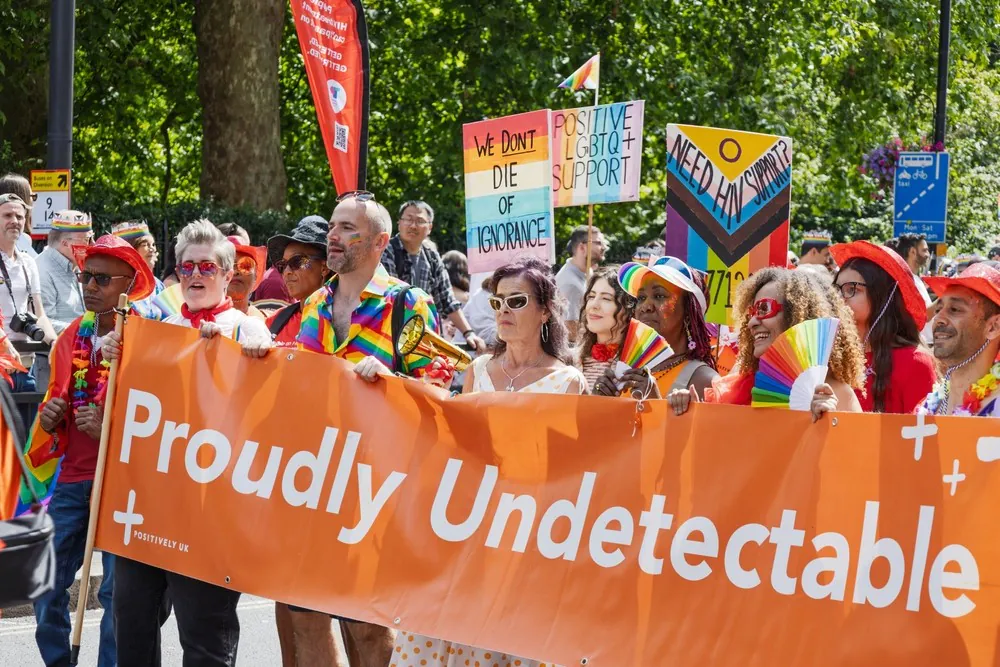
Nearly 2,000 people unknowingly living with HIV have been diagnosed by a pioneering NHS programme, which tests anyone needing a blood test in A&E, saving lives and preventing new infections, shows new data.
Under the first-of-its kind, large scale programme, adults in need of a blood test in A&E in 88 areas of England with the highest rates of HIV are routinely tested for the virus alongside hepatitis B and C unless they opt out.
Latest NHS data shows that 1,900 previously undiagnosed cases of HIV have now been identified by the programme since it began in April 2022.
If someone’s test comes back positive for HIV (or hepatitis B or hepatitis C) the person is offered specialist support from the NHS, and a treatment plan is agreed with them.
Almost all (93%) individuals diagnosed by the programme had no record of a prior HIV test – according to research by the UK Health Security Agency (UKHSA) – which health chiefs believe shows the initiative is reaching people who are unlikely to be tested routinely through other routes.
The data comes as a major new economic evaluation study – published in The Lancet HIV estimates that the first 802 new diagnoses from the programme’s initial phase, will prevent around 187 HIV-related deaths and 28 new transmissions over the next 20 years.
The research – conducted by the National Institute for Health and Care Research (NIHR) Health Protection Research Unit in Evaluation and Behavioural Science at University of Bristol – found the programme is cost-effective and is enabling people to start life-saving treatment sooner, improving health outcomes and reducing onward transmission.
“This routine approach to HIV testing in emergency departments has been game changing”
One in 20 people living with HIV in England don’t know they have it, and many others are only diagnosed after the virus has already caused serious damage to their health.
Professor Francesca Swords, NHS national medical director, said: “Knowing your HIV status is as important as checking your blood pressure; and this pioneering NHS programme is helping hundreds of people get a diagnosis – often before they have any symptoms at all – to access life-saving treatment.
“The NHS is committed to improving early detection of HIV and other blood borne viruses, and by helping more people get a diagnosis, this initiative is helping reduce the chance of people unknowingly passing it on to others.
“The rollout of this testing in A&Es is an excellent example of how the NHS is making every contact with patients count to support them to stay well and access treatment they may need, helping to save lives while making the best use of our resources.”
The HIV Action Plan 2025-2030, published by DHSC in collaboration with UKHSA and NHS England, sets out the government’s approach to end new HIV transmissions within England by 2030. It will continue the success of the blood-borne virus ED opt-out testing programme, investing £156 million from April 2026 to March 2029 to deliver opt-out HIV, Hepatitis B and Hepatitis C testing in emergency departments in very high and high HIV prevalence areas.
Dr Josephine Walker, lead author at the University of Bristol & NIHR Health Protection Research Unit in Evaluation and Behavioural Science, said: “At around £6 per HIV test, and even though a large number of tests are required to identify one undiagnosed person living with HIV, the programme is good value for money for the NHS. Importantly it has led to linkage to treatment to improve the health and lifespan of many people who were previously living with undiagnosed HIV.”
The study researchers say their findings provide evidence to support the continuation of opt-out testing in emergency departments as part of DHSC’s HIV action plan- which aims to end new HIV transmissions in England by 2030.
NHS leaders are continuing to rollout the programme to help more people unknowingly living with HIV; and a further three new hospitals will start offering testing to their ED patients by April 2027.
The three additional EDs taking part in the programme means it will be available in nearly all areas of England.
Katie Clark, Head of Policy at Terrence Higgins Trust, said: “This routine approach to HIV testing in emergency departments has been game changing. We now have very clear evidence that not only does this front-footed approach mean we are diagnosing people who are unlikely to be tested anywhere else, but also that it’s excellent value for money.
The continuation of opt-out HIV testing is crucial as we work to end new HIV cases in England by 2030 and ensure no one – regardless of gender, ethnicity or location – is left behind. The next step is to take the same approach to GPs in areas with a very high HIV prevalence.”
For more information on HIV testing services, visit nhs.uk

- Vibrating belts to slim off those curves - August 7, 2026
- Atypical Alzheimer’s patients deserve more focus - August 7, 2026
- Major expansion of community mental health support - August 7, 2026