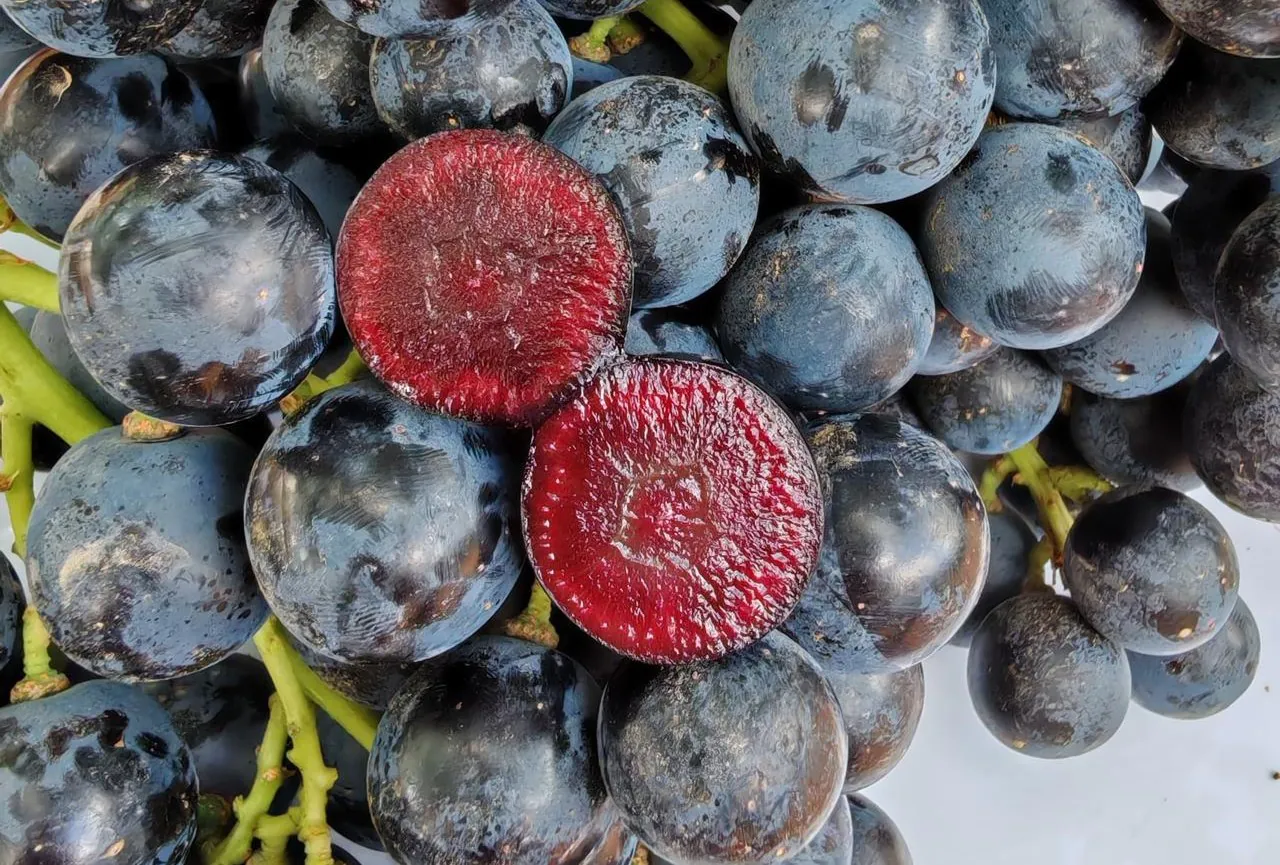
A new research review has highlighted the potential heart health benefits of red berry grapes, a unique red-fleshed table grape that looks like a classic dark grape on the outside but reveals naturally deep-red pulp on the inside.
Their benefits are associated with natural polyphenol compounds, notably anthocyanins and resveratrol.
The red berry grapes known as BOOMBITES offers a convenient and delicious way to enjoy the goodness of naturally red-fleshed red berry grapes as part of a healthy lifestyle. Diets rich in fruits and vegetables, including colourful fruits such as red berry grapes, are associated with overall cardiovascular wellbeing.
With cardiovascular disease being one of the most common chronic diseases worldwide, taking an estimated 20 million lives annually and an average of 460 Brits every day, it’s clear we need to be supporting our heart health in a better way.
Dr Nisa Aslam, GP and co-author of the new paper, published in the journal – Nutrients – Polyphenols and Cardiovascular Health: Emerging Relevance for Blueberries, Grapes and Red-Fleshed Table Grapes – explains: “Increasing attention is being given to dietary and lifestyle strategies for the prevention and management of cardiovascular disease. As a result, this new review of 37 studies (17 meta-analysis/systematic review and 20 randomised controlled trials) provides an exciting glimpse into the potential heart health benefits of natural plant compounds – most notably anthocyanins – a type of polyphenol, other polyphenols and resveratrol – all found in red berry grapes.
“Most people will have heard of antioxidants and the important role they play in supporting health. However, many of us will not know about anthocyanins and why we need them for good cardiovascular health. Anthocyanins are a group of powerful antioxidants, and they are attracting growing scientific interest because of their wellness benefits.
“Scientific reviews show that anthocyanins may benefit heart health as well as lowering inflammation markers, vital for vascular health needs, plus they help protect our cells from damage. Found naturally in dark-coloured fruits and vegetables, anthocyanins are the pigments that give fruits their distinctive dark red, black and purple colours, seen in foods such as blueberries, blackberries, red cabbage and red berry grapes.
“Anthocyanins, can help to regulate blood sugar and we need to control blood sugars to support our heart health”
Co-author, Professor José Abellán-Alemán a prominent professor of medicine, Director of the Cardiovascular Risk Chair at the Catholic University of Murcia (UCAM) and with a specialist in Medicine and Cardiovascular Risk explains further: “The research review studies grapes and blueberries and has placed a spotlight on red berry grapes and it’s natural plant compounds – anthocyanins, as well as resveratrol and polyphenols. And its the natural compounds – anthocyanins, resveratrol and polyphenols – that have been shown to contribute to improving cardiovascular risk markers, particularly in helping the endothelial function. Endothelial function is how well our blood vessels relax and regulate blood flow. Better endothelial function generally means healthier arteries and lower cardiovascular risk.”
Professor José Abellán-Alemán adds; “The review highlights that red berry grapes specifically tend to have higher levels of beneficial compounds as unlike many grapes, their pigments are present throughout the fruit.”
Dr Emma Derbyshire, public health nutritionist and co-author of the new Nutrients paper continues: “Of the controlled trials in the review, nine studies focused on grapes and grape-derived products such as red berry grapes. Some studies reported reductions in total cholesterol and less favourable LDL cholesterol. For example, in an 8-week study, participants with high cholesterol who consumed 500g of red grapes daily, experienced reductions in total and LDL cholesterol. Great news for our vascular health.”
Professor José Abellán-Alemán notes further: “Several studies also found improvements in blood pressure and also reduced oxidative stress, which is a natural process in the body where unstable molecules build up and can start to damage cells over time. It can be worsened by external factors.”
Dr Roy Jogiya, Chief Medical Advisor from Heart Research UK, a charity at the forefront of the detection and treatment of heart diseases, explains further, “There is a growing body of evidence which suggests anthocyanins are particularly important for a healthy heart and cardiovascular system. A systematic review, which was recently published in the American Journal of Clinical Nutrition found that people with the highest intakes of anthocyanins reduced their overall risk of cardiovascular disease by 26%.
“Looking at specific cardiac challenges, researchers reported an 18% reduction in myocardial infarction, more commonly known as a heart attack, the risk of developing high blood pressure being cut by 8% reduction and an 11% drop in type-2 diabetes – which often goes hand-in-hand with cardiovascular disease.”
Dr Roy Jogiya adds; “Eating the rainbow is a simple way to increase the variety of beneficial plant compounds such as anthocyanins in your diet and support long-term heart health. The greatest benefits come not from a single nutrient, but from consistently eating a varied, plant-rich diet alongside other healthy lifestyle habits.
Red berry grapes are one example of many fruits that provide beneficial polyphenols including anthocyanins and can form part of a colourful, balanced diet.”
Commenting further on other research around anthocyanins, Dr Nisa Aslam continues: “There’s impressive data which suggests that polyphenols, particularly anthocyanins, can help to regulate blood sugar and we need to control blood sugars to support our heart health. A large review of 37 clinical trials found that when people consumed more than 300mg of anthocyanins a day for at least eight weeks, they experienced improvements in several key markers linked to metabolic health which is also good news for vascular health.”

- Eyes could unlock personalised pain relief with virtual reality - October 22, 2026
- Why we really love murder mysteries - October 22, 2026
- New consensus to tackle postcode lottery in cancer care - October 22, 2026