This is the transcript of an interview with David Nott about being a father and a war surgeon.
Q: What’s it like saying goodbye to the girls and Elly when you go to a war zone?
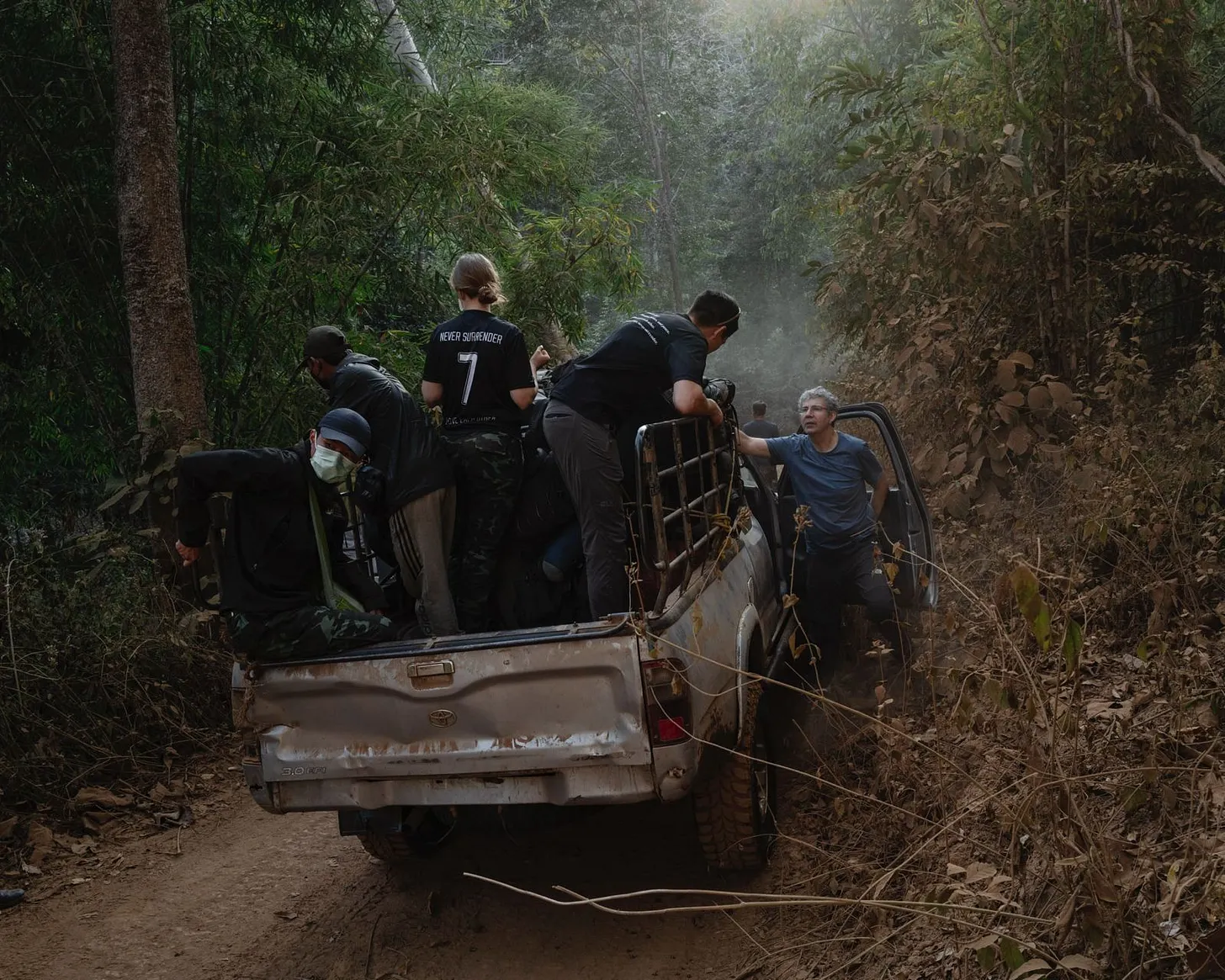
David: It’s very difficult. I’ll be honest with you. The last war zone I went to was Burma back in January/February of this year, and it was very difficult to say goodbye to Elly and the two little girls.
I was going out to do something that was an important thing to do, to be able to teach surgeons at the front in war zones, and it was an assessment as well, and I like to do assessments in new places to see whether we can do some good work. So, it was a nice thing to be able to do, but it was a dangerous mission.
But when you get there and you realise what you can do, and the knowledge that you can impart to people, it really is an important job to be able to do. Of course, when you’re there, you make 100% sure that what you’re doing is as safe as you possibly can, and you’re not taking risks, so you’re not actually going to the front line.
As in Burma, we were 500 meters away from the front line. But we were helping people who were wounded on the front line, so you’re not actually in the line of fire (although we were at some stage).
But then you do your very best to try and realise that you’ve got two little girls at home and your responsibility is to them, so you do everything you possibly can to try and save yourself, and don’t take as many risks as you probably would have done if you were a single person.
And of course the most fantastic thing is coming home, and I can remember when I landed in London, and I got on the tube and I ran up the road to see the little girls, and Elly, of course. It was one of the most amazing things to be able to do. My heart was in my mouth when I was running. It was a total joy to see them. I know I’m getting a bit emotional about it, but it’s a highly emotional thing to be able to do to leave your job in London…I have a great job, and you know, I treat people all the time, but there are other people that can do this job, and there aren’t that many people that can go to the front line of a war, for example, and survive, and come home, and, and rush to see their children. So it was, it’s just so heartwarming to be able to do that. It was fabulous.
Q: Do you think that fatherhood has made you see your job differently?
David: Yes, very much so, because so I think being a father is an amazing thing to have happened to me. Molly is now coming up to being 11, Elizabeth is 9, and it’s been the best 10 years I’ve ever had for being a father and having this responsibility to make sure that they grow up to be lovely children and respectful of the world around themselves and understand what’s going on.
We involve them in adulthood as well so when we have people around for our dinner, they are with us as well, so they involve themselves in the adult discussions and we try and show them what it’s like for us to go off to various places.
There’s always one of us at home, and as a father, I’m home with the children when Elly goes to Syria. If I go off to say Ukraine or Burma like this time, then Elly was at home. There’s always one of us at home to look after them. You can juggle it, but of course you don’t do the most dangerous things. You have this huge responsibility, which you realise is the number one in your life.
Q: It’s funny, because anyone can be a war surgeon, but only you can be the father to Molly and Elizabeth.
David: That’s true. I mean, there are now many war surgeons around. When I started, you know, decades ago, somebody said the other day that if you looked in the sky, there was just one star, and now if you look in the sky, there are many stars. Many people do this work now, and if I have influenced them to do this, then that’s amazing, and then I think that it’s a great thing to be a war surgeon. But it’s a better thing to be a father.
Q: Do you feel differently about going to war zone now that you are a father?
David: Yes, very much so. I mean, I feel like, you know, my responsibility is at home. My responsibility is to Molly and Elizabeth and to Elly, but you know, I have this other part of me, which is a war surgeon, and, and you know it’s, it’s something that I’m passionate about, something that’s developed over decades, and it’s very difficult to drop that.
So, I’m glad that we’ve trained lots of other surgeons in the way to deliver war surgery around the world, and of course, there are many people now in our faculty that go around the world as war surgeons.
And it was a great thing for Elly to have developed the David Nott Foundation, because without her we would never have trained as many surgeons to become war surgeons, we would never have trained surgeons to such a high level of teaching people in difficult environments, and I think that it was a great thing to be able to have done, and a great thing that we continue to do.
Q: You’ve operated on a lot of children, including children in war zones. Since becoming a father, do you see that as something even more meaningful?
David: Oh, yes, I think that you try and stay as unemotional as you possibly can when you’re dealing with any children in war zones, and you try and look at what the problem is, and you try and figure out, make the diagnosis, look at the treatment plans, operate, and try and save that child.
And of course, when you have children at home, it’s much more difficult, to be honest with you, because you know what that child is feeling, what the parents will be feeling as well, and it puts it into a completely different context. But still, you’ve got to be try to be as professional as you possibly can within that environment and operate on the patient. You do the best you possibly can at all times, whether it’s adults or children, but of course, realising that the child you’re operating on is the same age as your child makes it much more difficult sometimes.

- Violence against US nurses on the rise - October 2, 2026
- Back Up’s London fashion show - October 2, 2026
- Why do we sleep? - October 2, 2026