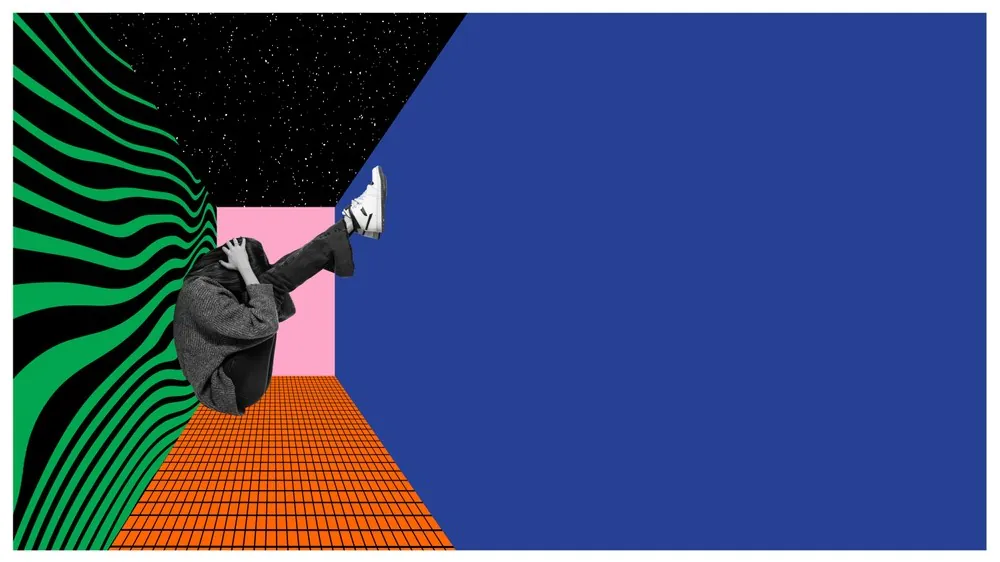
Phobias can feel overwhelming, irrational and, at times, completely out of proportion to the situation at hand.
Whether it is the sight of a spider, the thought of a dental appointment, the feeling of being in an open space, or the anticipation of seeing blood, the reaction can be immediate and intense: heart racing, muscles tensing, a sudden urge to escape, all happening before logic has a chance to step in.
After years of working as a fear and phobia specialist, one of the most important things I teach my clients is this: Phobias are not a sign of weakness or lack of intelligence. They are simply the brain’s learned response, and that response can be changed.
One of the most effective ways to understand and change these responses is through a process known as anchoring.
To understand anchoring, it helps to first understand how phobias form. Many phobias can be traced back to a moment, sometimes obvious, sometimes subtle, where the brain linked a specific stimulus to a strong emotional response. This is the mind’s way of trying to protect us.
For example, a child startled by a spider may link spider = danger. A painful or distressing dental experience may create dentist = fear. Feeling faint at the sight of blood may become blood = panic. A panic attack in a crowded place may become outside = unsafe.
In that moment, the brain creates an association. A trigger becomes linked to fear.
This is known as conditioning, as demonstrated by Ivan Pavlov, where a bell became associated with food, leading dogs to salivate automatically at the sound.
Over time, this response becomes faster, stronger and more automatic. Importantly, this process happens at a subconscious level, which is why trying to think your way out of it often has limited effect.
Anchoring is simply the process of linking an emotional state to a specific trigger. Most of us experience this naturally all the time. A song can instantly bring back a memory. A smell can transport you to childhood. These are anchors, connections between a stimulus and an emotional state.
The problem is that many phobias are built on negative anchors that were created unintentionally. The opportunity is that we can also create positive anchors, deliberately.
If a phobia is created through a learned emotional association, then change comes from creating a new one. Instead of trying to suppress fear, we teach the brain a different response.
Take a fear of spiders. The initial response is often visual, the moment the spider is seen, the body reacts. By repeatedly pairing that image, even imagined at first, with a strong feeling of calm or control, the emotional charge can be reduced and eventually removed.
With dental phobia, the anchors are often layered, the sound of the drill, the smell of the room, the anticipation of discomfort. Anchoring can be used to associate those cues with feelings of safety or relaxation, breaking the automatic stress response.
A simple way to begin creating a positive anchor is this. Think of a time when you felt calm, safe or completely at ease. Step into that moment, see what you saw, hear what you heard, feel what you felt. At the peak of that feeling, apply a small physical action, such as gently pressing your thumb and forefinger together. Hold it for a few seconds, then release. Repeat this with several positive emotional states, calm, confidence, connection, even laughter. Over time, this physical action becomes linked to those feelings.
Then, when you begin to notice a fear response starting, you use that same action. If the anchor is strong enough, it can interrupt the pattern before it escalates. You can think of it like this, when both negative and positive responses are triggered at the same time, whichever is stronger will win. With enough reinforcement, the positive response can neutralise, and sometimes even replace, the fear.
I once had a client who, right at the end of a session, said, “By the way, I’m terrified of turbulence. Is there anything you can do?” With only a few minutes left, I had her step into a powerful memory of feeling safe and linked it to touch. Then we linked turbulence. Once the positive feeling was strong enough, I combined them.
A few months later, she messaged me from a plane, not needing help, but saying, “Now when I think about turbulence, I feel happy.”
That is the key point. With a strong enough positive association, you do not just reduce fear, you change your response.
You can reinforce this over time. When you feel calm or confident, repeat the physical action to strengthen the anchor. Over time, it becomes something you can activate when needed.
The key thing to understand is that a phobia is the brain’s attempt at a solution. At some point, your mind decided something was dangerous and created a response to protect you. Techniques like anchoring work because they do not fight the brain, they work with how it naturally learns.
Find out more about anchoring here
- How Anchoring Can Help Treat Phobias - April 10, 2026
- Ridiculous Spell can help fix your phobia - March 1, 2018
- 10 most common Christmas stressors - December 22, 2017